PinForge demo article • Original AI-generated concept images • Saved as a draft for testing.
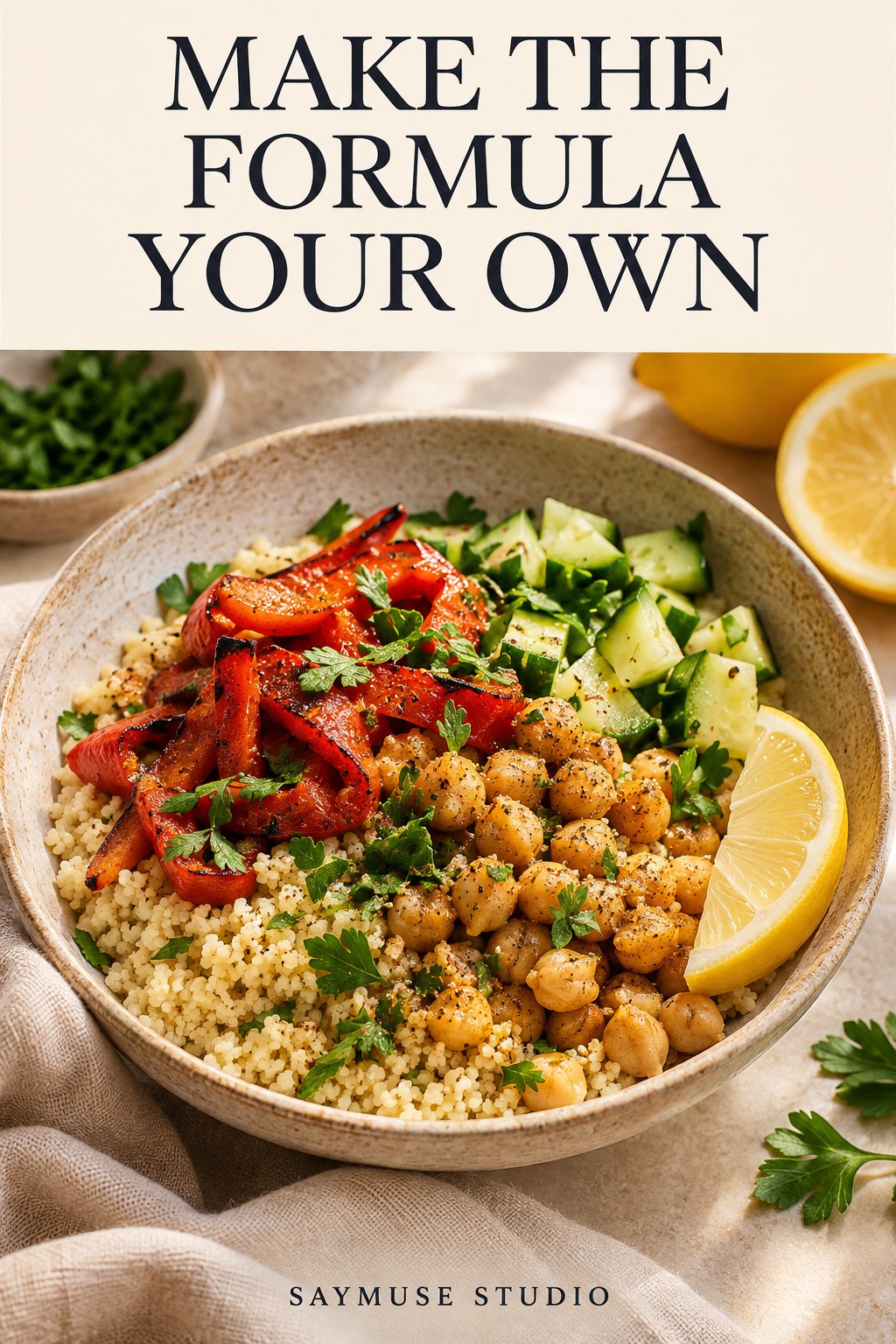
A good make-ahead lunch needs enough texture to stay interesting and enough flexibility to use what is already in the kitchen. These lemon chickpea couscous bowls combine a simple grain base, cooked chickpeas, crunchy vegetables and herbs. The dressing is deliberately straightforward so you can adjust the lemon and oil to your own taste.
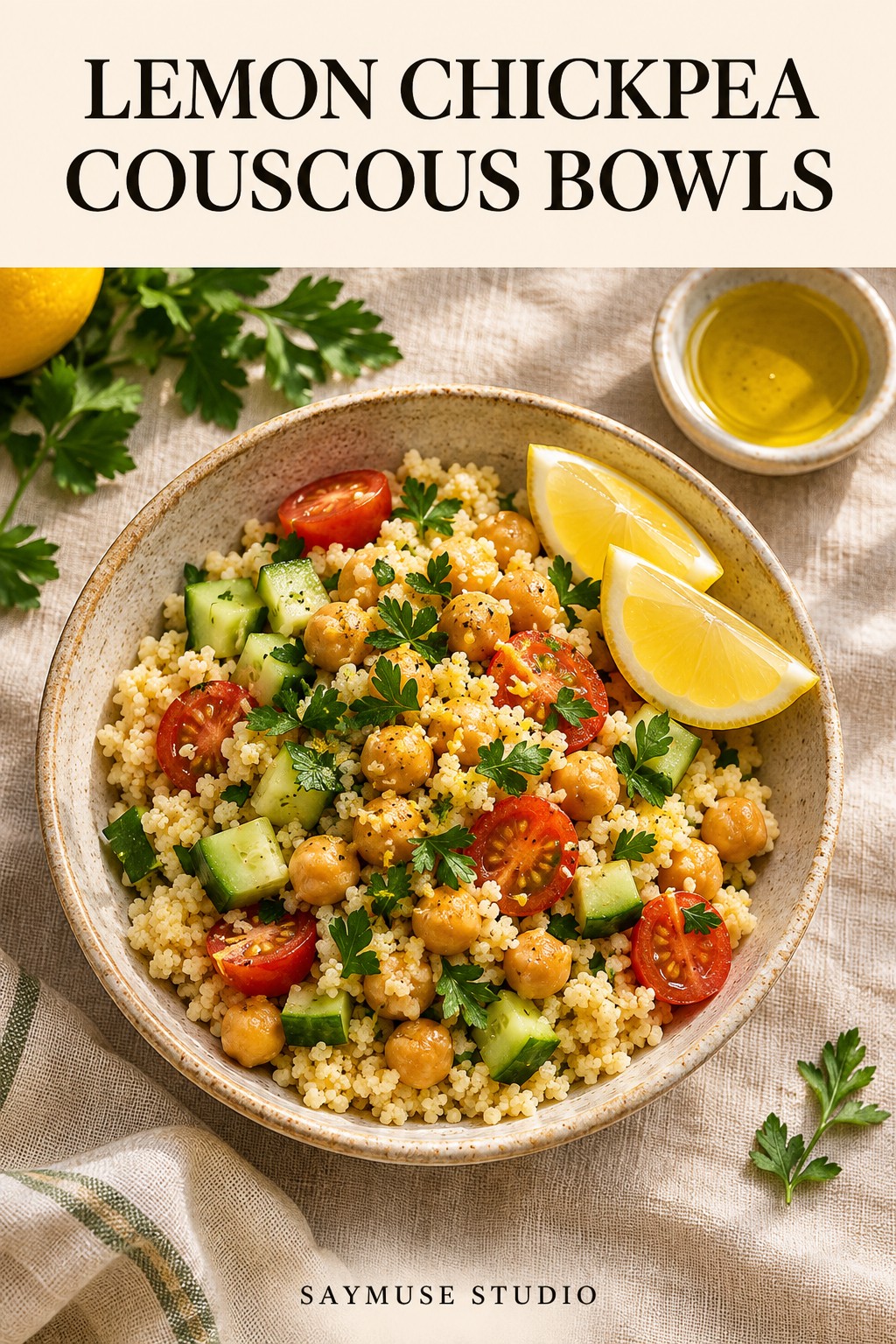
This version is a starting recipe for about four modest lunch portions, depending on appetite and additions. Standard couscous contains wheat and is not gluten-free; choose an appropriate alternative if needed and check all packaging for allergens. Prepare and store food safely according to local guidance. The images are original illustrative serving ideas, not nutritional or medical claims.
Inside this guide
- 1. Prepare and fluff the couscous
- 2. Prepare vegetables with texture in mind
- 3. Make a small, adjustable lemon dressing
- 4. Assemble a bowl that is easy to eat
- 5. Pack the components thoughtfully
- 6. Adapt the bowl without losing its structure
Ingredients
- 200 g dry couscous, prepared with liquid according to its package
- 1 can cooked chickpeas, about 400 g before draining, rinsed and drained
- 1 cucumber, diced
- 250 g cherry tomatoes, halved
- A small handful of parsley, chopped
- 2 tablespoons olive oil, plus more to taste
- 2 tablespoons lemon juice, plus extra wedges
- Salt and black pepper to taste
- Optional: crumbled feta, olives or extra cooked vegetables
1. Prepare and fluff the couscous
Prepare the couscous using the liquid amount and method printed on its package. Different products can need different ratios, so the packet is a more reliable guide than a single universal instruction. Once it has absorbed the liquid, loosen it gently with a fork rather than pressing it into a dense layer.
If you plan to serve the bowl cool, spread the prepared couscous into a shallow suitable container so it can cool promptly before refrigeration. Do not leave prepared food sitting at room temperature for an extended period. Follow the storage and cooling guidance appropriate to your kitchen and location.
2. Prepare vegetables with texture in mind
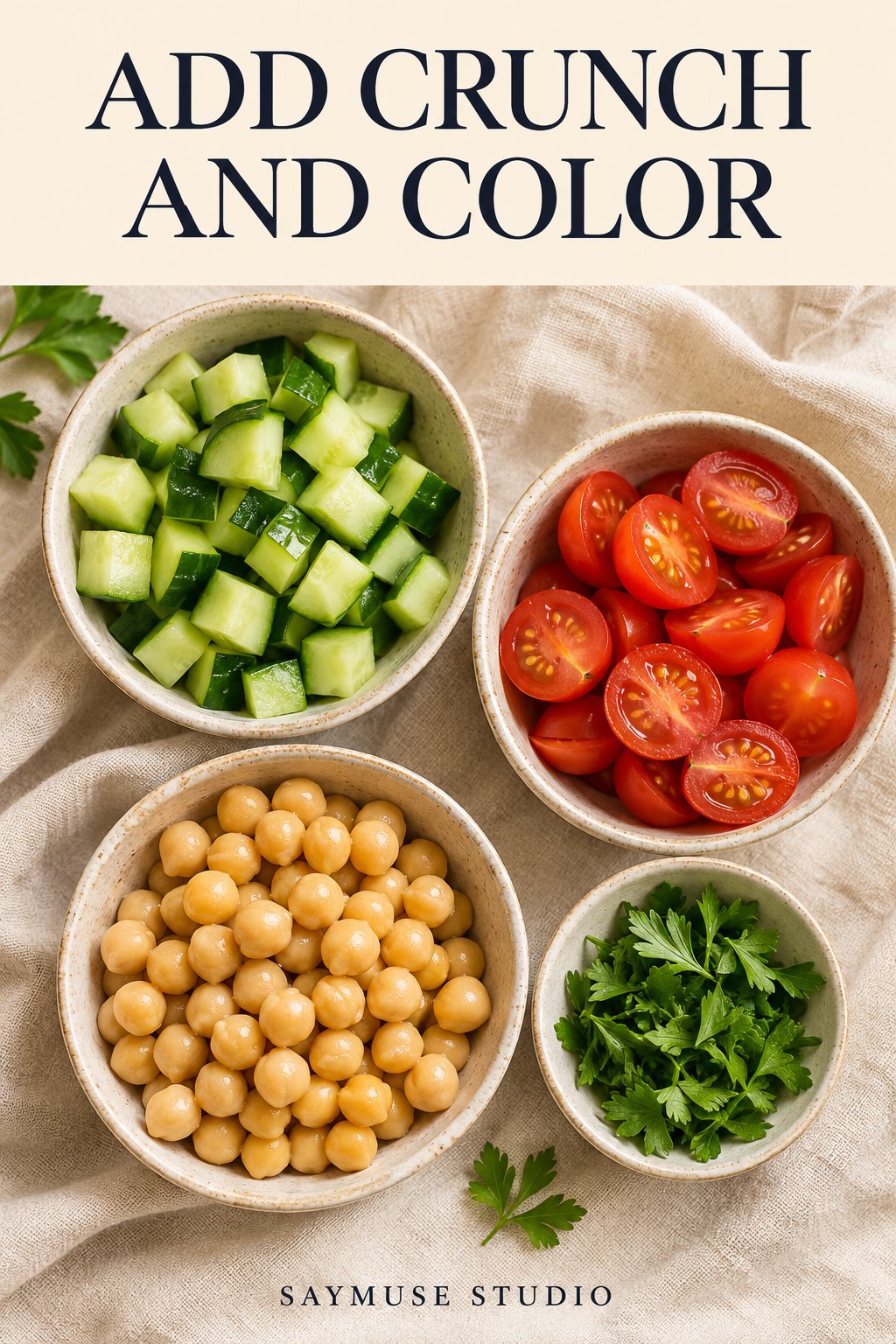
Dice the cucumber into pieces that are comfortable to eat with a fork, and halve the tomatoes. Chop the parsley after washing and drying it. Keeping the vegetables a similar size makes it easier to get a little of everything in each bite, while larger pieces tend to separate from the couscous at the bottom of the container.
If your cucumber is especially watery, remove some of the loose center before dicing. For a packed lunch, you can also keep the cut vegetables separate from the grain base until you assemble the bowl. Use fresh, sound ingredients and clean equipment, and adapt the selection to what you enjoy rather than buying extra items for appearance alone.
3. Make a small, adjustable lemon dressing
Mix the olive oil and lemon juice in a small bowl or lidded jar. Add a little salt and pepper, then taste with a spoonful of couscous rather than judging the dressing on its own. The grain and chickpeas soften the overall flavor, so a mixture that tastes sharp by itself may work well once combined.
Start with some of the dressing and add more as needed. It is easier to brighten a bowl with another squeeze of lemon than to remove excess liquid. If you add salty ingredients such as olives or feta, season cautiously until those additions are mixed in. No special blender or expensive ingredient is required.

4. Assemble a bowl that is easy to eat
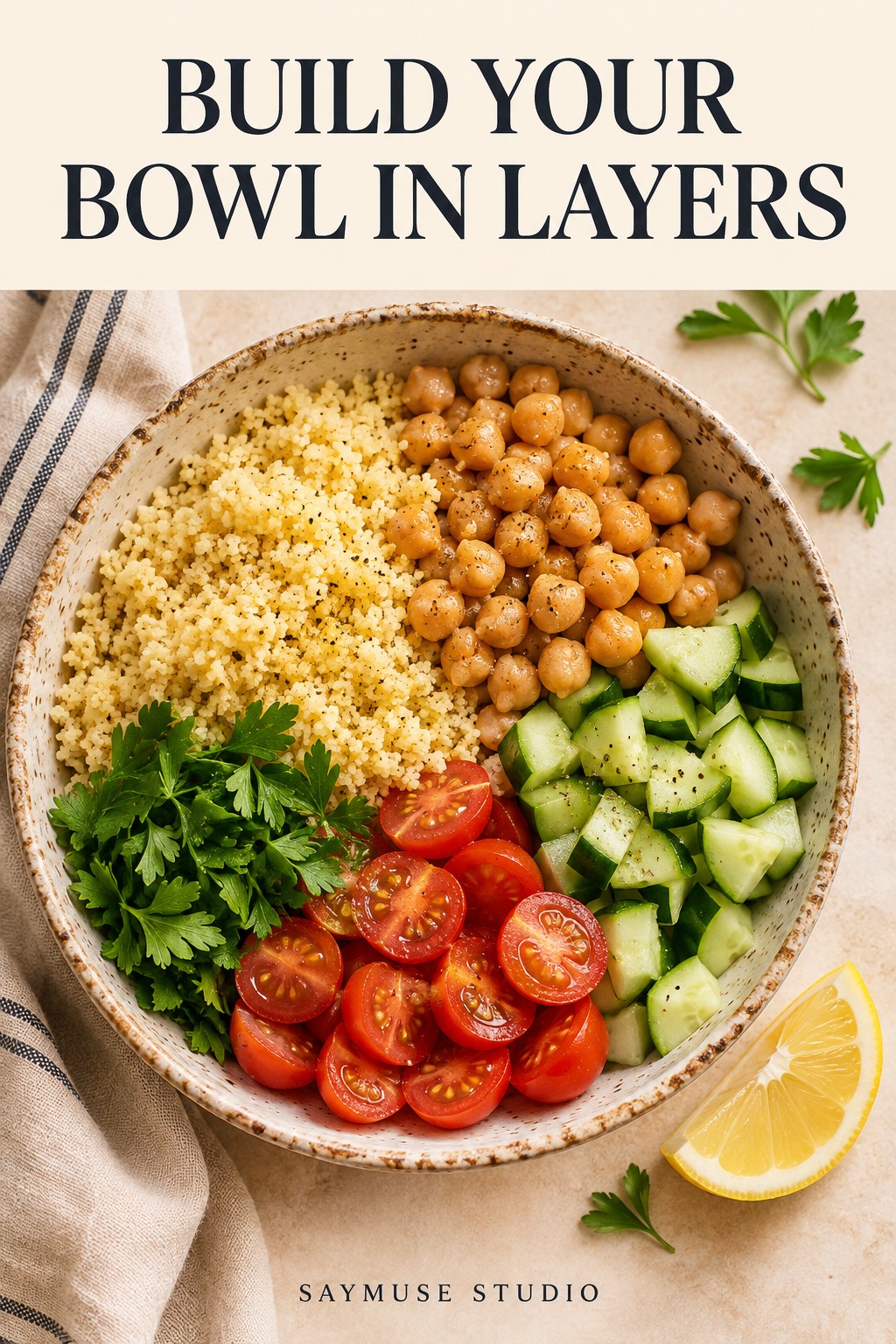
Combine the fluffed couscous and drained chickpeas, then fold in the vegetables and parsley. Add enough dressing to lightly coat the mixture, tasting as you go. For a serving bowl, you can keep some ingredients in loose sections before mixing; for a lunch box, an even mix usually makes each forkful more balanced.
Add optional extras only if they improve the lunch for you. Roasted vegetables, olives or feta can work, but the basic recipe is intentionally simple. If you need a larger meal, increase the portion or serve something alongside it according to your needs. Avoid treating an attractive serving arrangement as a fixed portion-size rule.
5. Pack the components thoughtfully
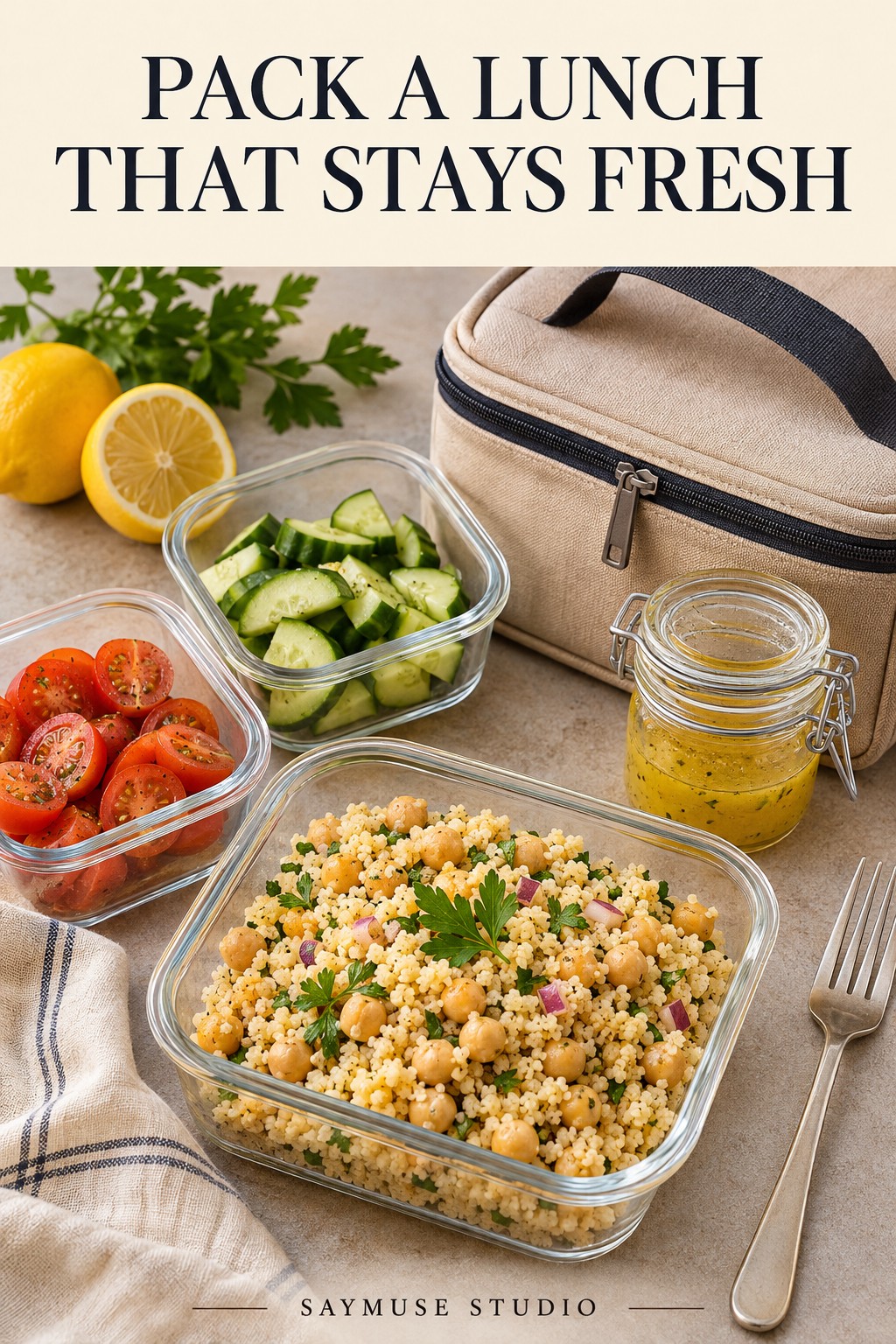
Use a clean, food-safe container with a reliable lid. If you prefer a crisper texture, pack the dressing and particularly juicy vegetables separately and combine them when you eat. Keeping an extra lemon wedge in a small separate container can make it easy to refresh the flavor without adding more oil.
Refrigerate prepared ingredients promptly and keep them appropriately chilled during transport. Follow local food-safety guidance and ingredient storage instructions rather than relying on a blanket promise about how many days every version will last. If you add another ingredient, its storage needs become part of the plan too.
6. Adapt the bowl without losing its structure
Think of the recipe as a flexible structure: a prepared base, a cooked bean or other suitable addition, something crunchy, something juicy, herbs and a dressing. You might use a different cooked grain, choose peppers instead of cucumber or swap parsley for another herb you already like. Check cooking instructions and allergens when changing the base.
Make one change at a time when you are learning what you enjoy. That makes it easier to understand which textures and flavors are doing the work. The aim is a dependable lunch that fits your kitchen and routine, not a long shopping list or a claim that one bowl is suitable for every dietary need.
Save this quick checklist
- Follow the couscous package method and allergen information.
- Taste the dressing with the grain before adding all of it.
- Cool, refrigerate and transport prepared food safely.
- Keep dressing separate if you prefer more crunch.
- Adapt portions and ingredients to your own needs.
Testing note: open this draft with the Create Pinterest Pins shortcut to try image selection, collages, overlays, brand settings and AI metadata. Publishing or Pinterest import is a separate deliberate action.
Leave a Reply